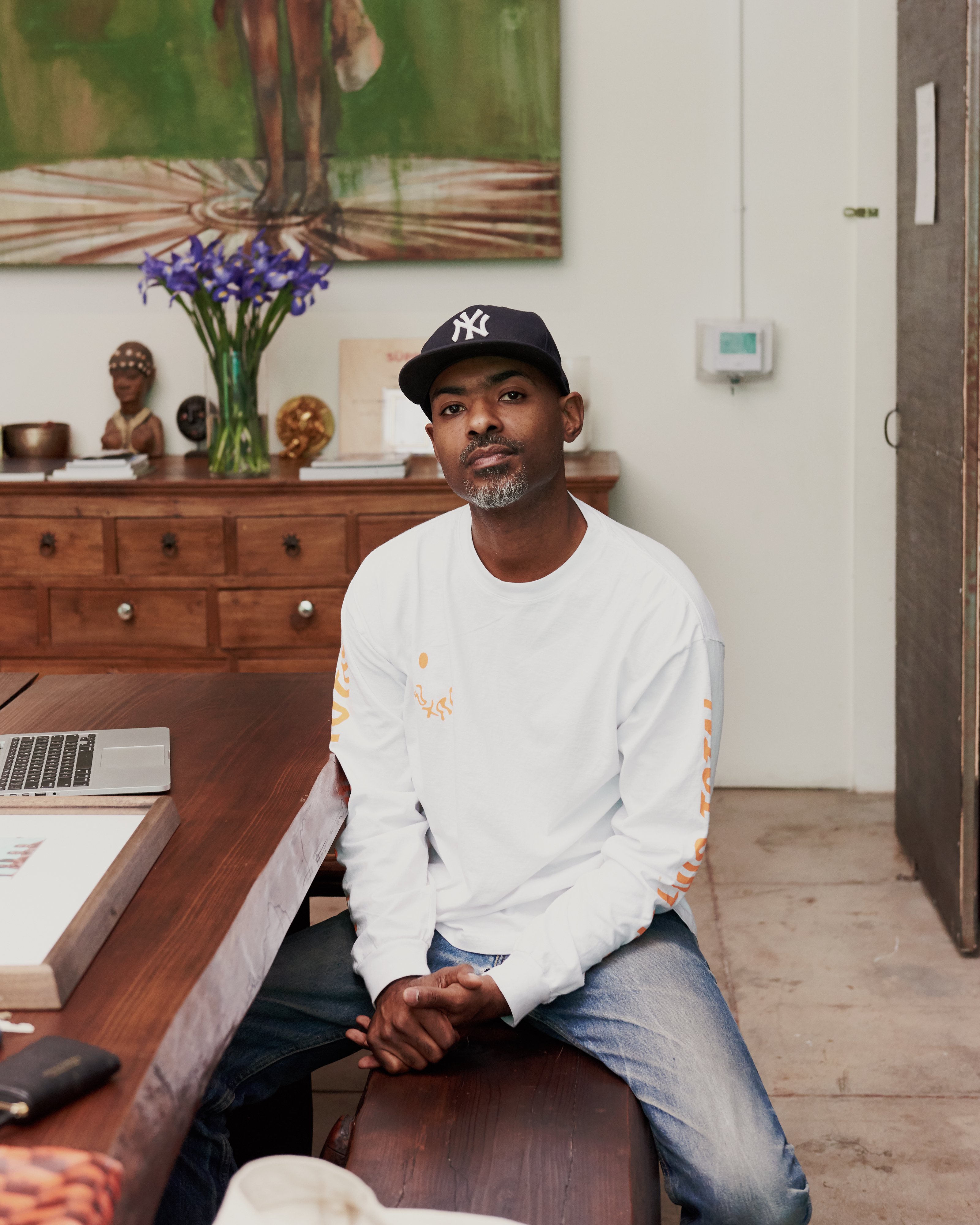
Artist and filmmaker Kahlil Joseph’s multi-faceted practice embraces cinema, visual art, sound, and media. His films and video installations are deployed in both mainstream environments and the art world, from the Venice Biennale to a Black-owned barbershop in Washington, D.C. Joseph’s heightened musical sensibility and rhythmic editing are always palpable whether he’s working in experimental cinema – imagine fractured narratives, blurring of past and present, fiction, dreams, and reality – or journalism.
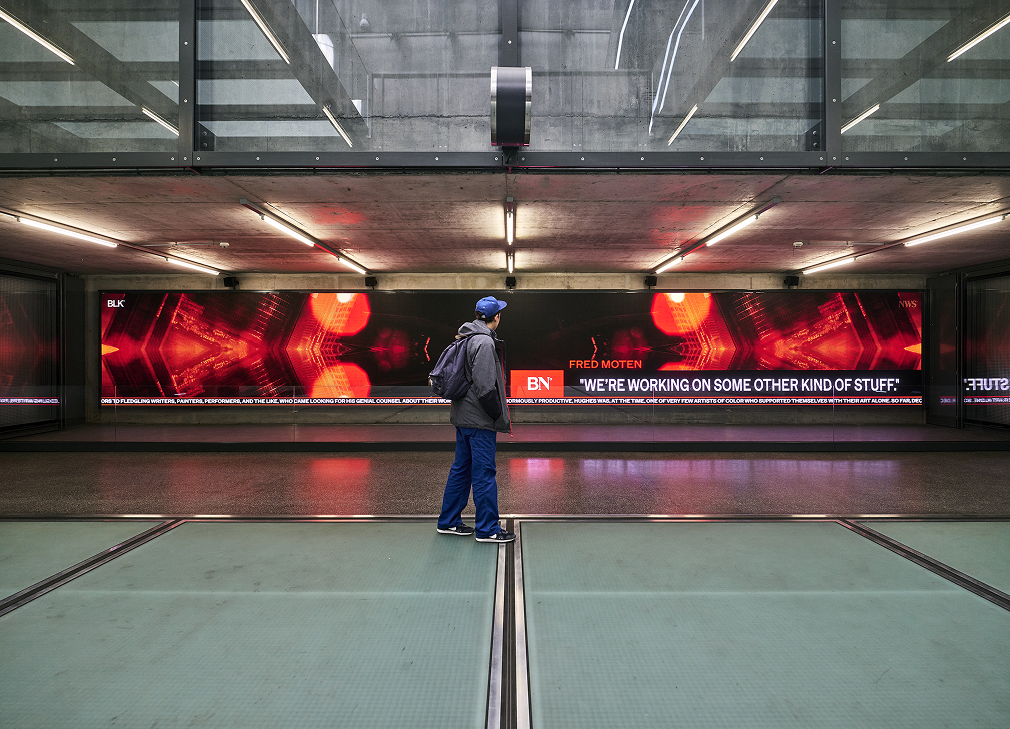
Joseph’s ongoing conceptual news program BLKNWS is a multi-site video installation that also operates as a media entity. The constantly-changing two-channel project, with its uninterrupted flow of found footage, originally-produced segments, and current and historical news clips expanding on the current power of broadcast journalism, ultimately does away with hierarchy of information. At the core of all of Joseph’s shape-shifting work, one comes face-to-face with deeply felt experiences of quotidian moments, propulsive energy and Spirit.
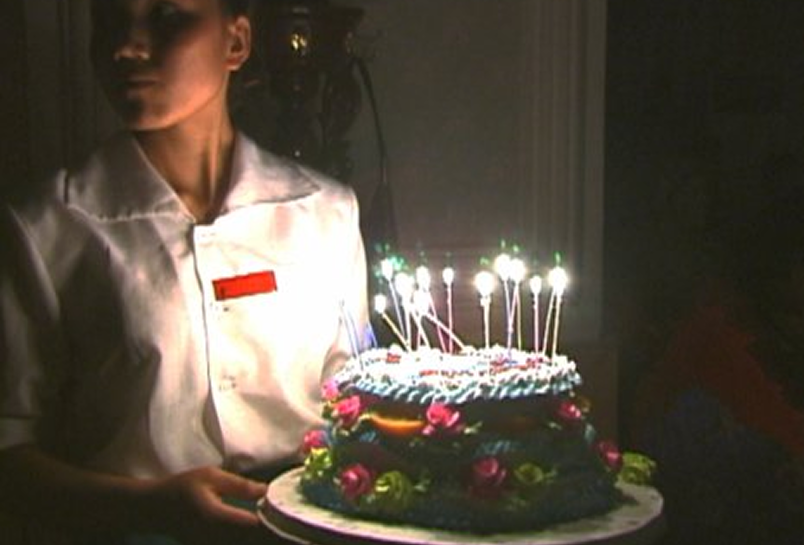
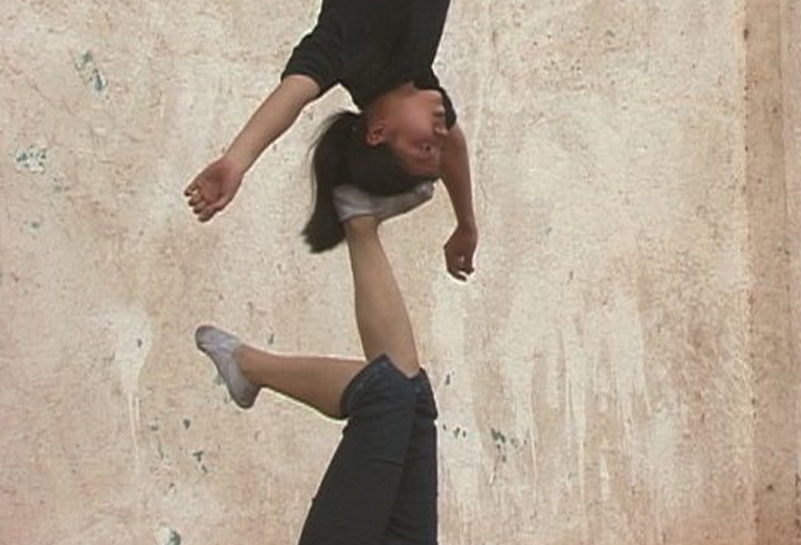
Still from "O'er the Land," 2009.
Artist Statement
“I’m convinced what I’ve always imagined as a completely redefined cinema is not only possible but expected, and I’m impassioned to help birth this cinematic and artistic inevitability.”
— Adam Khalil
I’ve always considered myself to be a student of cinema, of the moving image. The other side of this claim is the unspoken understanding that what I’m most interested in is articulating aspects of this medium that are newly possible. I also consider myself a trained filmmaker, thus I find my artistic practice is primarily concerned with film. With the rise and domination of the Internet, the possibilities of what film can be–both as mainstream media in and of itself, and as an artistic medium–have never been greater. Short, long, multi-screen, single-channel, A.I. co-authored works, etc.…the spectrum of ‘what film is’ has ripened considerably. It is in this conversation and liminal place where I seem to be most comfortable, working in the space between cinema, art, and possibility.
In opposition to the reactionary 24/7 media cycle, BLKNWS takes a more thoughtful approach to its programming, and allows history to collide through a contemporary art lens, inviting the viewer to imagine a future built on unrealized possibilities.
To my knowledge, there are no ‘video artworks’ that have an undefined duration or ever-changing content. The broadcast is a living archive of itself: BLKNWS, by way of a preexisting function available through the BrightSign media hardware, is literally networked back to my production studio, where I’m able to update the broadcast and control the work remotely, with the ability to push or remove new programming on demand–it’s effectively live broadcasting, but in the form of a fugitive newscast. Wherever you are, in Tokyo or Los Angeles or the Netherlands or New York, when you’re watching BLKNWS you are seeing the same program that is playing ‘live’ at each satellite around the world. But you’ll never see the exact same BLKNWS broadcast twice, since there are always remixed versions being pushed from the studio. The work itself is also a commentary on our screen-culture (the work is only installed on TV screens), and is presented in a two-channel format to give imagery new context based on the intentional, rigorous curation of the broadcast.
My work explores life’s intangible forces—memory,
The Herb Alpert Award application asks candidates to write about experiences in their lives that have impacted them as creative artists.
Noah Davis [1983-2015] taught me everything I know about being an artist. The whole time he was my brother, or when he was sick, I didn’t realize I had been blessed with one of the greatest mentors I could have possibly imagined. He shared all his frustrations and concerns about the art world, all his passions and beliefs. I was witness to his spiritual commitment to the history of art, his craft as a painter, his voracious appetite for looking at art in the world. He gave me a first-class art education that is one of the most cherished gifts of my life.
Another dimension of having Noah in my life is the inherited custodianship of his famed magnum opus and community brainchild, The Underground Museum, [est. 2012]. Through it I have learned to be an arts administrator, co-curator, trustee, janitor, fundraiser, protector and deep listener. This experience has left a major impression on my understanding of what it means to be an artist in the 21st century; to think less about the business and politics of the being a ‘professional artist’ and focus more on the expansive realms of what art could mean to both artists and the community.
While preparing for my first New York show in 2017, the artist David Hammons randomly called me about a tree he needed delivered from the city. Having never met David before or even knowing how he got my number, I dropped everything to find the tree in a question, and assembled a crew to drive it to his studio located more than hour away. When I arrived, he realized we had never met before; the entire day, he thought he had called someone else. David saw this event as a sign from the Universe, and took me under his wing for the rest of my research leading up to the opening of my first solo show at the New Museum, a period that has marked and will continue to influence me forever.
In 2002, I went to a familiar local theater to see a movie called Cremaster. I had seen Hollywood movies, but no one told me this was ‘Art, ’not just a movie. Perplexed by the experience, but also not completely confused since the history of cinema has some pretty abstract offerings, I have been profoundly impacted by Barney’s revolutionary gesture to release a complex, original artwork via a popular or conventional distribution apparatus, outside of the gallery/museum model. I’m still shocked to this day how few examples have picked up on or furthered this model.
I met Arthur Jafa as a young film student [2001]. No other intellectual or practitioner has a greater impact on how I think about or approach the moving image. I’m not unique in my relationship to his body of thought and work, but I am unique in my intimacy and proximity to both. From his theories on Black cinema, the unstable frame, the abject, Black visual intonation, I’m convinced what I’ve always imagined as a completely redefined cinema is not only possible but expected, and I’m impassioned to help birth this cinematic and artistic inevitability.