My practice is a commitment to exploring ideas of democratic, communal music making, an approach where talent or ability are not the driving principles that propel a musical or artistic idea.
Through collective thought and compassion, more people of different backgrounds and abilities are able to share equal creative space.
I find beauty and importance in first interactions, the first time you dance, draw, make a sound on a piano. That first occasion and its accompanying excitement that you're trying something new is the essence of our creative mind. Trying anything new, unprompted, and without instruction, requires both problem solving and discovery to happen simultaneously. Your creative DNA is exposed in these moments; I believe it's key that we acknowledge this element and not view it in passing.
There is a way to freeze that moment of discovery, identify it, stay there and grow, providing alternative directions for development that are primarily focused on the desire to collectively communicate more than on one's technical ability, thus challenging social norms and modern concepts of what it means to be proficient.
Brilliance absent of facility:
Through several projects, I've called upon both 'novices' and 'trained' musicians to explore these ideas. Centering our mindset for the collective goal of letting go of ideas of 'good' or 'bad' and aiming to have a wider view of the musical gestures and ideas we contribute.
Inhibition is the enemy of creative improvising:
By prioritizing the letting go of the importance of facility or the fear of not being proficient enough, a positive byproduct is the shedding of ego, opening up a more level field for people of different training and backgrounds to create together. I have created this methodology for myself and, as part of this, persistence and hard work are vital elements in my practice.
I challenge the direction of where we aim our efforts. By shifting our focus off of preexisting structures, we can change what we've thought something should be: the instrumentation of a big band, how music is notated, a sound of a trumpet is all more malleable than their descriptions. Bending and expanding our idea of things creates more space for a wider group of people to participate creatively. This has become the sole focus of my life's work in both my own practice as well as in collaborating with other artists.
Formal training, development of advanced skills and technical ability are absolutely necessary and the perfect format for so many. Yet people who don't easily take to this mode of learning should have other avenues of creation. Simplicity, reduction, rawness, are elements all of us have immediate access to; they are vital components – the essence – of creativity.
The courage it takes for anyone to try something for the first time is enough for me.
My plans for the near future are to continue exploring these concepts through a variety of projects. One is a creative music workshop to be held at a senior living facility. The participants would receive 6 weeks of lessons focusing on a variety of skill building including improvisational techniques, graphic musical score writing, & small ensemble work. The project would culminate with a final performance to be recorded and released.
Another project: creating an open-to-the-public monthly improvised music workshop in the Germantown neighborhood of Philadelphia. This workshop is geared to those who have never played an instrument before or are musicians looking for a creative outlet.
The long-term goal of this project: to be an incubator for new ideas and possibly another entryway into music.
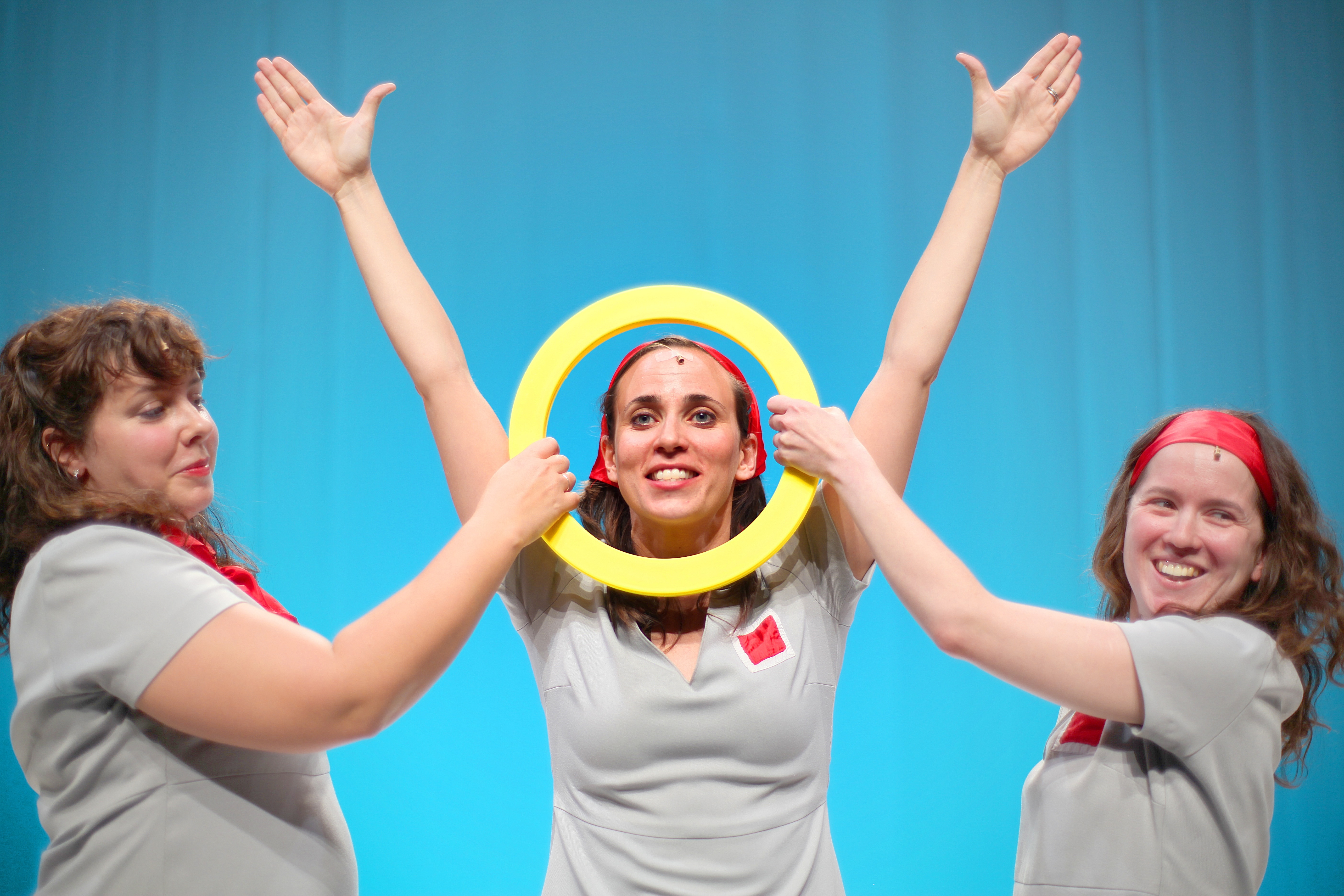
The third project is a continuation of PLAY, an ongoing performance project that is an amalgamation of all of my current creative outlets. My goal is to create a performance film every 10 years representing all of my creative interests over the decade. The first film was released in 2017/2018, and I am in prep for production of the second film slated to be released in 2027.
My interest in 'creative beginnings' has allowed me to utilize other mediums to express ideas. I approach creating music, film, photography, paintings, sculpture, choreography, instrument building, and circuit design with the same ethos: to acknowledge your initial impulse, examine, grow, expand and challenge it.
When presented with a creative problem, I recognize the challenge is the struggle between the ‘how to do’ vs ‘what to do.’ By focusing on the idea first – the ‘what’ – opens up unlimited possibilities of 'how' to achieve the idea. The 'what' is your initial idea; it must come first. On the other hand, focusing first on the 'how' allows only part of the creative potential to shine though.
A hammer drives a nail:
If we think of a hammer, we think of its purpose: to drive nails. So we look for nails to drive. But if we think of the nail first, a hammer can be anything, a piece of wood, a rock, a shoe etc. The nail is your 'idea', and I'm interested in what you come up with for a hammer.
Creativity lives in these spaces.
Creative problem solving has become a significant aspect of my work in other artist's practices as well, discovering and following their root idea and finding solutions, dealing with the idea itself and ignoring aspects of ‘how.’ It's important to start with something ridiculous and impossible, and work backwards from there.
To have an idea and have other mediums available to me to best express that idea has shifted my work to bridge across mediums.
All expressive mediums become equal and feed each other within my practice. Doing so provides a wider language of expression for me to draw from. Working across mediums, I am also able to contribute to other artists' practices with different ways of creative problem solving.
Whether orchestrating, creating a film component, music direction, or creating improvisatory musical language for a piece, I am most interested in the artist's root idea and ways that I can possibly assist that idea becoming reality.
Within collaboration:
The people I've worked with on their projects include Theaster Gates, Joshua Abrams, Rob Mazurek, Jeff Parker, Tomeka Reid or more recently with Marshall Allen.
I approach everything this way. Within my own projects I aim to provide the objective first and accept whatever means people use to tackle that objective. Find out what needs to be communicated. Find the strongest, simplest way to achieve that while serving the group. More than ability, this approach relies on commitment and care.
In other words, it is possible to not be the most ‘talented' person in the room yet have a significant role and impact.


.JPG)